
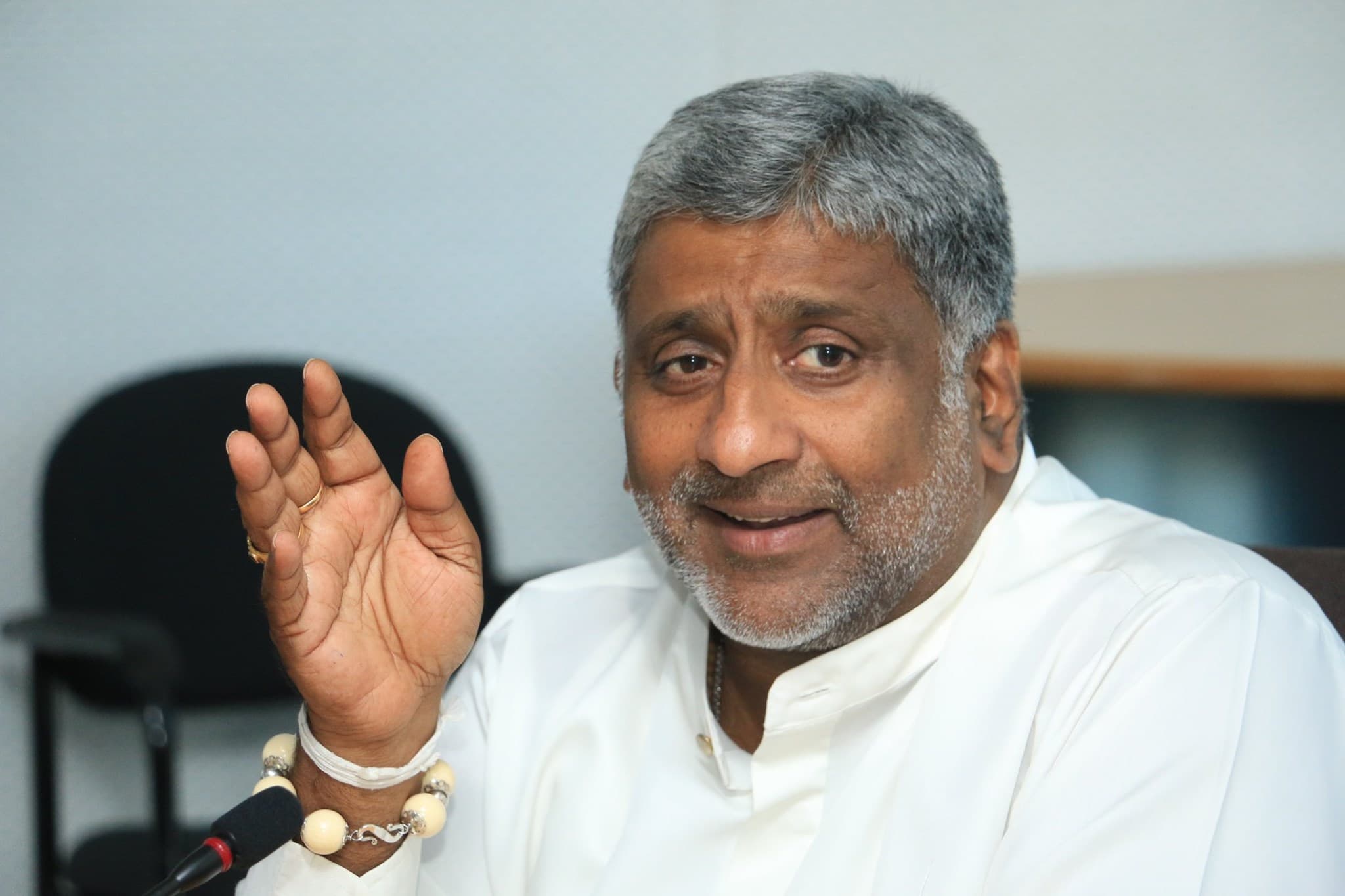
Prasanna Ranatunga, former minister of tourism and civil aviation in Sri Lanka, was arrested on Wednesday by the Commission to Investigate Allegations of Bribery or Corruption (CIABOC) in relation to a purported corruption case from 2021. In a statement issued by the commission, it states that the arrest is "in relation to irregularities in the procurement of an insurance scheme for four state-owned institutions under the Ministry of Tourism and Civil Aviation while Ranatunga was a Minister."
CIABOC’s investigation found that instead of procuring the insurance policies directly from the state-owned Sri Lanka Insurance Corporation (SLIC), Ranatunga instead directed the procurement to a private brokering company. This allegedly led to a loss of more than the equivalent of 4.7 million rupees (approx. 24,000 U.S. dollars at the 2021 exchange rate) to SLIC, causing serious concerns for misuse of public resources and abuse of ministerial power.
The case has gained notoriety because of the wider problems of corruption charges against former ministers, as well as ministers and other government officials in Sri Lanka. These events demonstrate the continuance of corruption and the work of commissions that continue to play their role to ensure transparency and accountability in public office. The commission emphasized that arresting Ranatunga represented the conduct of a necessary legal process in order to investigate and hold public officials to account for financial mismanagement and unethical conduct.
Ranatunga's arrest shows the importance of following proper protocols in procurement, particularly when state institutions are involved. He allegedly facilitated the use of private intermediaries rather than dealing directly with the state insurer, practically engaging in improper procedures that could allow financial irregularities.
Following his arrest, it is anticipated that Ranatunga will not face criminal charges but is scheduled to be produced before the Colombo Chief Magistrate's Court. Only legal procedures will determine whether Ranatunga is formally charged, face a trial, or released on bail pending investigations. If nothing more, the case may help to set precedence for other pending corruption investigations, thus reinforcing the work of anti-corruption bodies vis-à-vis the onus of eliminating financial wrongdoing committed by public officials.
The incident has sparked public debate about accountability, governance, and the ethical responsibilities of individuals in ministerial positions. Citizens and advocacy groups have highlighted the need for stricter oversight of public projects and the importance of enforcing transparency to prevent similar incidents in the future.