
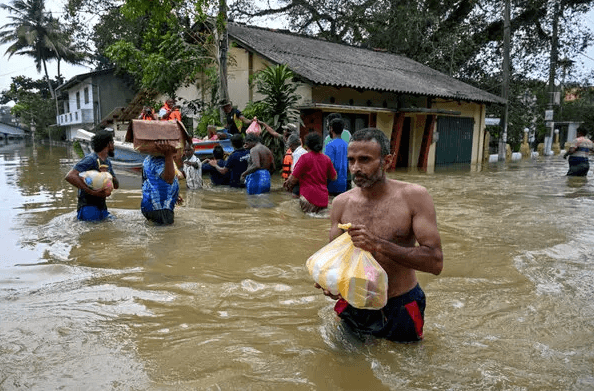
Severe flooding and mudslides in Southeast and South Asia have resulted from weeks of intense monsoon seasons and tropical storms, primarily affecting Indonesia and Sri Lanka. In Indonesia, 950 people have died, 274 are missing, and over 5,000 people have been injured as a result of flooded Aceh, North Sumatra, and West Sumatra provinces.
Flooding displaced thousands of families, destroying homes, hospitals, schools, offices, and bridges throughout the affected areas. Many residents in these areas are experiencing shortages of food, drinking water, and medicine. The price of many basic necessities, such as eggs and fuel, has increased dramatically. The Indonesian National Disaster Mitigation Agency (BNPB) has estimated total reconstruction costs from these floods to be 51.82 trillion rupiah, or approximately $3.1 billion.
Sri Lanka has also suffered catastrophic loss of life as a result of Cyclone Ditwah, which caused massive rainfall, flooding, and mudslides throughout the country. 627 people were killed, over two million residents were displaced, and nearly 38,500 military personnel were mobilised to assist in rescue and recovery efforts and rescue over 31,000 individuals.
The president of Sri Lanka, Anura Kumara Dissanayake, has announced several measures to assist the displaced, including a cash support package to help them rebuild their homes, replace lost items, and provide support for their livelihood. The Sri Lankan government is seeking international assistance, including assistance from the International Monetary Fund (IMF), as it seeks to recover from the 2022 economic crisis.
Both governments are on alert for the continued danger of excessive rainfall and the threat of landslide mechanisms in both countries. Climatologists suggest that with climate change, the seasonal rains fall in a more inconsistent and more extreme manner and contribute to the overall increase of vulnerability to local communities.
Overall, the disasters underscore the urgent necessity of developing improved methods to deal with future disaster preparedness, stronger and more resilient infrastructure to survive future events, and proactive responses to mitigate human and economic losses.