
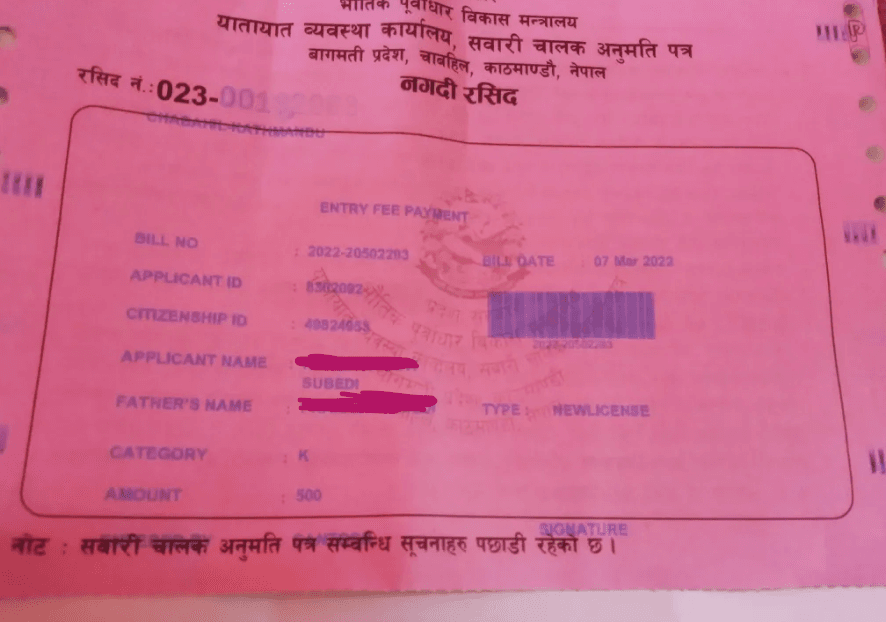
Thousands of Nepalis are still waiting months to receive their smart driving licenses, despite the Department of Transport Management (DoTM) operating a mass printer for nearly a month. When the printer was launched, the backlog was estimated at 600,000-700,000 licenses, and this number remains largely unchanged, raising concerns over the department’s ability to meet growing demand. Officials estimate that clearing the backlog could take six to seven months.
Tirtha Raj Khanal, DoTM Information Officer, said the main challenge is the daily influx of applicants, which averages around 7,000 people. “Even though the mass printer operates efficiently, the number of new applicants continues to outpace output,” Khanal explained. Many individuals who have passed both the written exam and practical tests are still waiting for their licenses, some approaching a year-long delay.The mass printer, supplied by Indian company Madras Security Printers in 2019, was meant to improve efficiency after earlier efforts by a local firm failed due to quality issues. Initial delays in starting the printer’s operations were attributed to improper installation and lack of trained operators. After training, the printer has been capable of producing up to 500 licenses per hour, operating 10–12 hours daily.
The backlog of applications illustrates a larger issue with the licensing process in Nepal. In 2024, an investigation by the National Vigilance Center (NVC) uncovered that many driving trial centers located within the Kathmandu Valley were intentionally failing applicants in an attempt to compel them to purchase a fraudulent driving license. The NVC found that some of these trial centers failed to follow the standard configurations for the practical driving test, as well as lacked the proper facilities to conduct these driving tests, and even required applicants to provide their own vehicles, which increased the failure rates for all applicants.
Officials say the Bagmati provincial government, which has jurisdiction over the centers, has been slow to regulate or shut down noncompliant facilities. “Unless these centers are brought under proper regulation, the trend of illegal licenses will continue,” NVC Secretary Ram Aadhaar Sah warned.
The expected timeline for clearing the backlog was initially estimated to be four to five months by the Department of Transport Management (DoTM), but due to increased demand and inefficiencies in the process, that time has been extended.
For applicants, the inability to obtain a driving licence affects their ability to operate legally, even though they have completed all necessary paperwork. It also highlights how difficult it is for the Government of Nepal to keep pace with the demands of the population while also modernising its processes.
As the DoTM continues its efforts to streamline their service delivery, thousands of drivers in Nepal are left waiting with the hope that the DoTM can catch up and clear the current backlog before the backlog continues to cause an increased disruption to their day-to-day lives.