
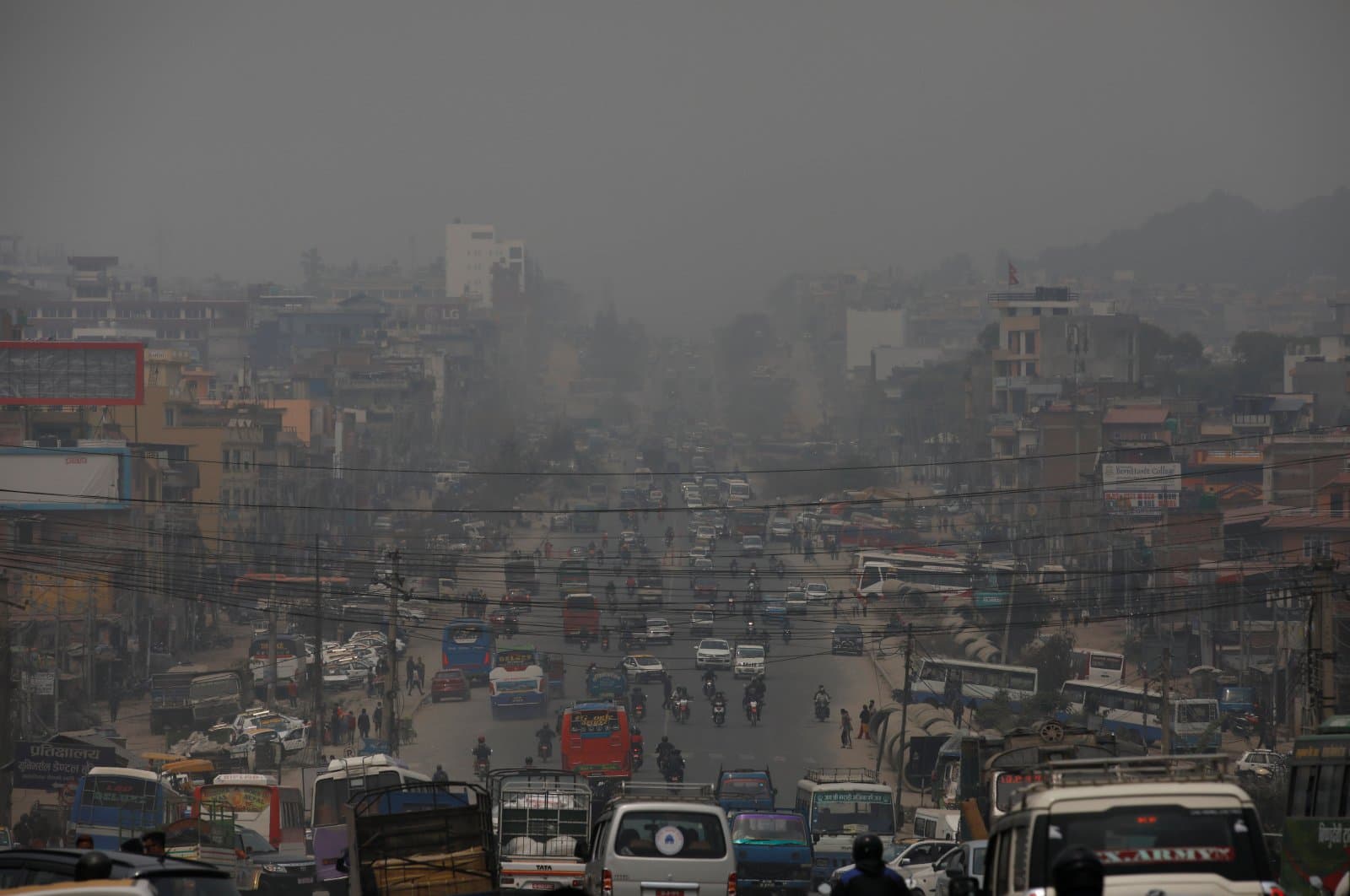
The increase in air pollution is steady at a dangerous level throughout Nepal, especially in Kathmandu Valley and other metropolitan areas.
Surkhet, at 9 a.m. today, reported the worst level of pollution at 170 PPM followed by Bhaktapur with 132 PPM, Deukhuri of Dang with 124 PPM, Shankha Park in Kathmandu 123 PPM, and Khumaltar, Lalitpur at 105 PPM. Shankha Park has gone from 73 PPM yesterday to 123 PPM today.
Experts attribute this alarming trend to dry weather, still air, burning of crop residue, and non-eco-friendly construction.
The crisis is not limited to Nepal. In India’s capital, Delhi, air quality has also deteriorated sharply, reaching the ‘Very Poor’ category on Sunday with an average AQI of 391.
Pollution from such nearby regions as well as generally from emissions nearby has contributed to poorer conditions and presented considerable risk to human respiratory health.
In previous years, haze would last typically a week, but just earlier this year, with the exception of few areas, the majority of the country has suffered with haze consistently for more than two weeks.
Officials and experts have reiterated the urgent need for public education, preventive measures, and long-term mitigation strategies to protect citizens from the escalating health risks linked to worsening air pollution.