
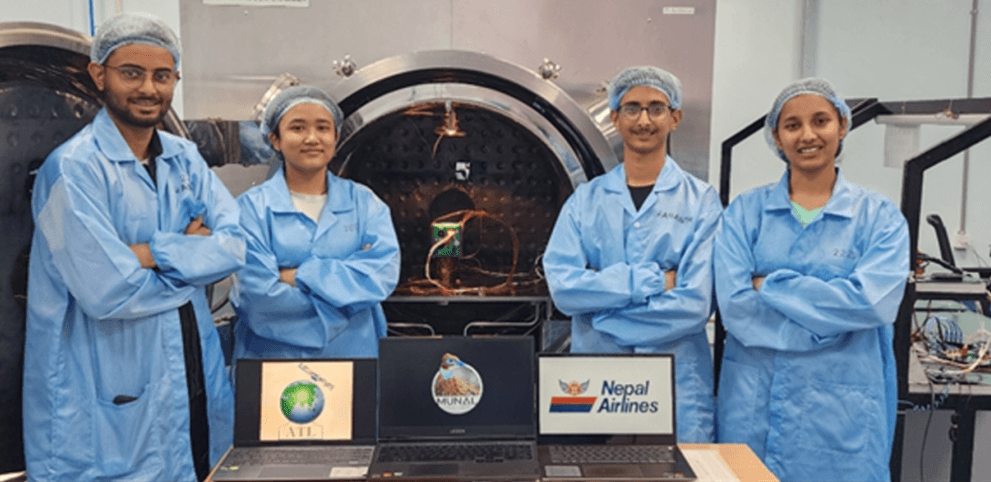
Nepal’s journey in space technology reached a historic moment on Monday, albeit with a setback, as the student-built satellite Munal failed to reach orbit due to a technical anomaly during launch. The satellite, developed under the guidance of the Nepal Academy of Science and Technology (NAST), was built by higher secondary students over two years at the country’s first Space Systems Laboratory.
Munal was intended to serve multiple purposes, including vegetation monitoring, testing indigenous space technology, and processing satellite data using artificial intelligence. Its launch was planned as a rideshare payload alongside 15 other satellites on India’s PSLV-C62 rocket from the Satish Dhawan Space Centre in Sriharikota. According to the Indian Space Research Organisation (ISRO), the rocket encountered a problem during its third stage, where an unexpected drop in chamber pressure led to insufficient thrust. As a result, the satellites, including Munal, could not be deployed into orbit.
ISRO Chairman V. Narayanan said, “While the initial flight stages were nominal, the third stage failed to provide the required thrust. As a result, the satellites could not be placed in orbit.” The organization confirmed that a detailed analysis of the anomaly is underway to identify and correct the cause.
Though technically unsuccessful, this launch was seen by many as a positive accomplishment within the context of the scientific growth of Nepal. The Munal project illustrates that Nepal is moving into the realm of creating and constructing space-ready technology and show the leadership shown by Nepali youth in advanced scientific research. Munal was to have been used from a station on the ground in Khumaltar, Lalitpur, to gather and share information and experience about how to manage satellites.
This move follows the previous milestone for Nepal with the launch of NepaliSat-1 in 2019 from the USA, with international support. Munal is a fully Nepalese-based project which involved the work of students to the exclusion of any outside assistance. Dr Ravindra Prasad Dhakal, Secretary of the Nepal Academy of Science and Technology (NAST) stated, “Although the launch did not go as planned, the project has shown that Nepal has a presence in the world space community with the requisite knowledge and the drive to move forward. The students who took part in Munal learned practical knowledge that will help them in future missions.”