
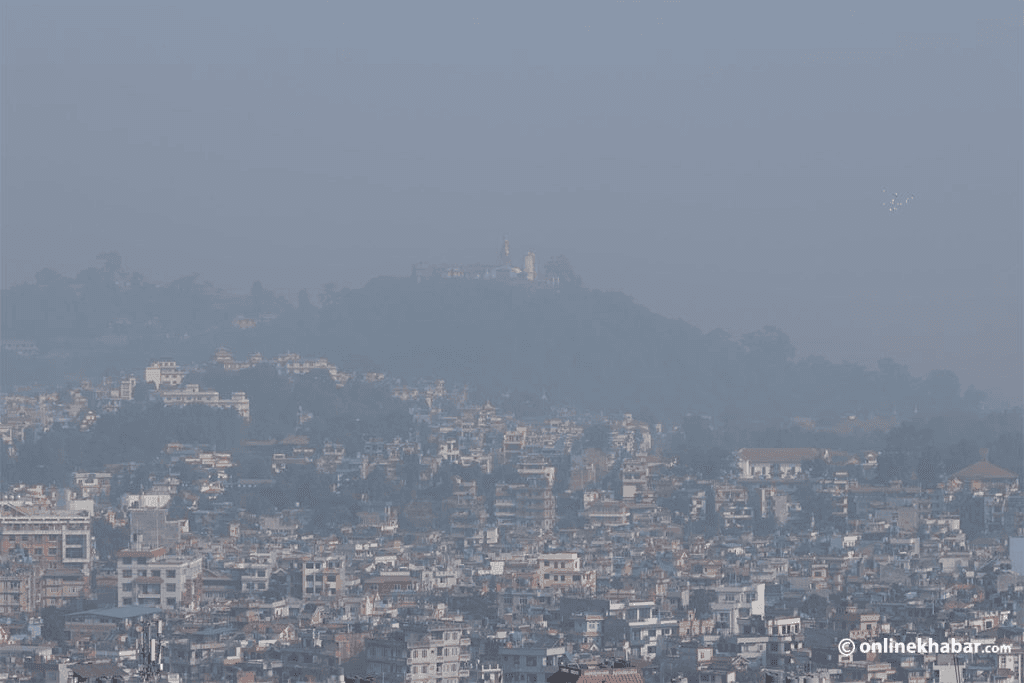
Air pollution has vast consequences for human health, with data on the health-related impacts of air pollution available in numerous sources. The most recent estimation of the impact of air pollution on health was produced by the World Bank in its report published in 2025. The World Bank ranked "air pollution" as the largest health risk for morbidity and mortality in the country of Nepal and clearly placed this health risk above all others. The World Bank estimated that the average air quality has reduced the average person’s life expectancy by 3.4 years and contributes to approximately 26 thousand premature deaths per year across the nation due to the association of air pollution with chronic lung, heart, and other diseases.
According to members of the medical community, an increase in individuals suffering from respiratory distress, irritation of the eyes, chronic cough, and other symptoms associated with air pollution has been reported by physicians treating such patients during periods of peak concentrations of smog. In addition, local pulmonologists stated that an estimated 50% or greater of the most recent outpatient visits suffered from respiratory issues due to their environment's poor air quality, including cases with prolonged cough and severely low oxygen levels.
Despite the clear health burden, policy responses have been limited and often fragmented. Government departments and local bodies have issued advisories and encouraged individual precautions, but experts say that isolated measures such as repairing potholes, banning open burning in limited areas, or sporadic awareness campaigns are insufficient without broader institutional coordination. “Something is definitely being done… but the measures being taken are not sufficient,” environmentalist Bhusan Tuladhar told the Kathmandu post, emphasizing the need for uniform action across government agencies.
Officials from the Department of Environment acknowledge the problem and have called for public cooperation to reduce emissions from vehicles, industrial sources, and burning practices. The department notes that air quality over much of the November to May period often falls into unhealthy or worse categories, urging sensitive groups children, the elderly and those with pre‑existing conditions to take extra precautions.
Experts recommend multi‑sector strategies that include stricter vehicle emission standards, expansion of public transportation, promotion of cleaner fuels and technologies, and enforcement of regulations on brick kilns and industrial emissions. There is a need for coordination between federal and provincial and local levels of government, as well as the development of real-time air pollution monitoring systems, to provide a strong response to air pollution.
Policy, regulatory measures, public awareness, and behaviour change should be part of an effective response to air pollution. The provision of health advisories regarding the need to wear masks when the AQI is high, along with encouragement to stop unnecessary emissions, can lead to more successful execution of air quality improvement efforts.
However, without a systematic approach to air quality improvement, including sustained enforcement of all the public health recommendations associated with air pollution, the likelihood of continued improvement in air quality will be minimal.