
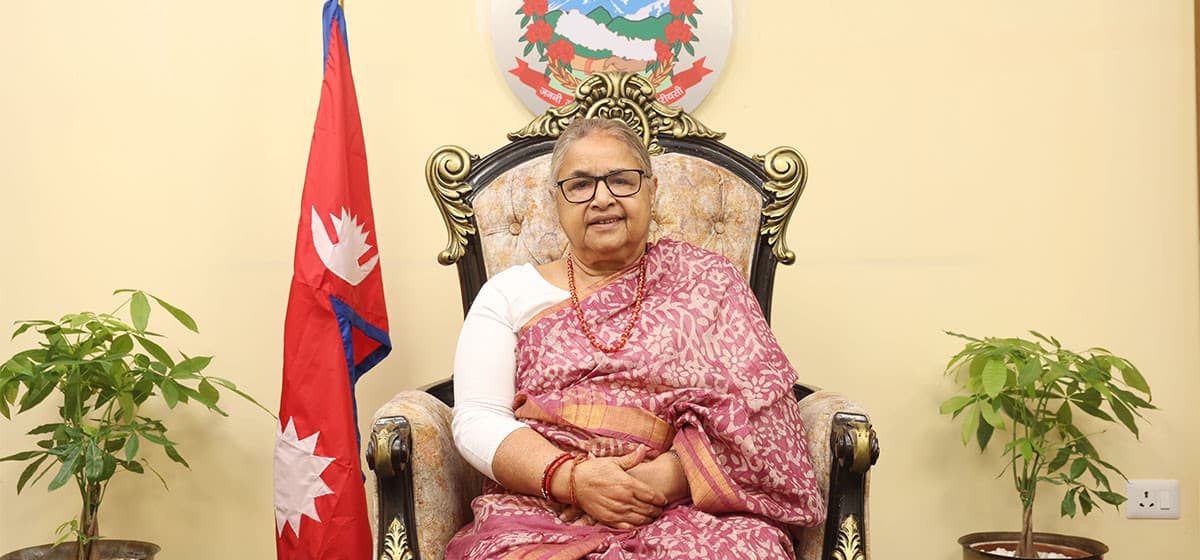
Prime Minister Sushila Karki has urged a thorough analysis of the viability of inter-constituency voting in Nepal, stressing the point that Nepalis living abroad should also be integrated into the electoral process. Prime Minister Karki spoke on Wednesday from her office in Singha Durbar and noted that traditional elections are increasingly misaligned with the aspirations of the younger generation, particularly Generation Z, and that they need new ways of thinking about these issues.
"Political parties and candidates incur hefty costs transporting voters from cities to their constituencies, and that opens the door to corruption. Therefore, we need to do something substantive," she said, stressing the importance of a clear and practical process.
The Prime Minister explained that for flexible reform to happen, there would have to be political will. She also pointed out that political leadership needed to recognize and capitalize on the digital literacy of the younger generation. "Let's build a system," she said, encouraging all participants to begin preparing for the process.
At the meeting, Home Minister Om Prakash Aryal expressed the government's commitment saying, "This is an election government. Therefore, the past mistake must be corrected, and we have to move ahead accordingly."
The meeting included senior officials from the Ministry of Home Affairs, Ministry of Law, Justice and Parliamentary Affairs, the Policy Research Institute and the Department of National ID and Civil Registration. In the meeting, the Policy Research Institute made a presentation related to a research study on granting voting rights to Nepalis abroad.
After discussions, a study team was subsequently formed of members from the concerned ministries, the Election Commission, and the Policy Research Institute to further deliberate on inter-constituency voting in terms of feasibility and implementation. The team is expected to come up with recommendations that make the process of elections more inclusive and efficient, as well as transparent, besides reducing financial and logistical burdens on political parties.
Meeting participants noted that the changes in voting practices could help Generation Z and citizens living abroad participate better in democracy and should diminish the potential for systemic corruption and violence. They also indicated technology-oriented responses would lead to significant improvements in voter management and casting ballots.
The initiative is an important advance in Nepal's attempts to modernize and, in doing so, leverage the traditions of the past while also improving the cultural context to modern expectations. PM Karki's initiative signals a growing understanding among political leaders that meaningful change must happen to rebuild trust in democracy, mobilize youth to vote, and ensure fair inclusion from all over Nepal and the diaspora.