
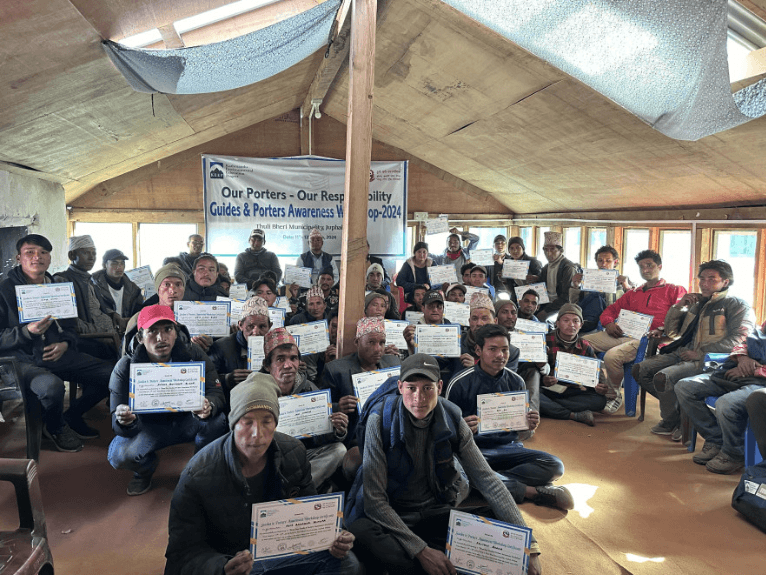
Trekking porters in Nepal play a vital role in supporting trekkers across the Himalayas. Although trekking porters provide essential services for the country’s tourism industry, they are frequently subjected to harsh working conditions.
Trekking porters carry very heavy loads (often between 40 and 60 kg) over steep slopes, through snow-covered mountain paths, and in extreme cold weather. Some porters use worn-out shoes and thin clothing while doing this, while most do not know their rights to compensation, food, and insurance; therefore, they are exposed to unsafe working conditions. Porters usually have inadequate sleeping conditions; frequently, they cannot sleep in a lodge like the tourists and instead must sleep on the ground or in a very small shelter.
Most porters are from lowland areas, and they are not naturally acclimatised to high altitudes, so they must endure significant effort to perform their jobs. There are no clear policies regulating the maximum weight a porter may carry, nor are there any regulations relating to the safe use of trekking porters. Due to this lack of regulation, the risk to a porter increases dramatically when he or she reaches elevations greater than 5,000 meters.
Trekking porters have an incredible sense of dedication; they are responsible not only for carrying the luggage of the trekkers, but they also lead the trekkers safely through rough terrain. Through their experiences as trekking porters, many become very knowledgeable and develop skills as they learn other languages, and some even become leading trekking guides, travel agency owners, or tourism officials.Their work, while often unrecognized, is essential to the smooth functioning of trekking operations in Nepal.
Porters face not only physical challenges during their treks but also low wages and limited access to food and insurance. Porters are an important part of the tourism industry, and many porters are at risk of death or injury while carrying out their job responsibilities, even though these risks could be minimized through appropriate support and regulations.
According to experts, improving the welfare of porters will be essential for supporting the growth of tourism in Nepal's trekking industry. “Porters are the backbone of trekking in Nepal,” said a tourism official. “Without them, trekkers would struggle, and the industry itself would be severely affected. Supporting them is not optional; it is essential.” It is expected that providing porters with minimum wage standards, safe working conditions, appropriate equipment, and the right to organize collectively will help protect porters and, in turn, support the continued development of the tourism industry in Nepal.